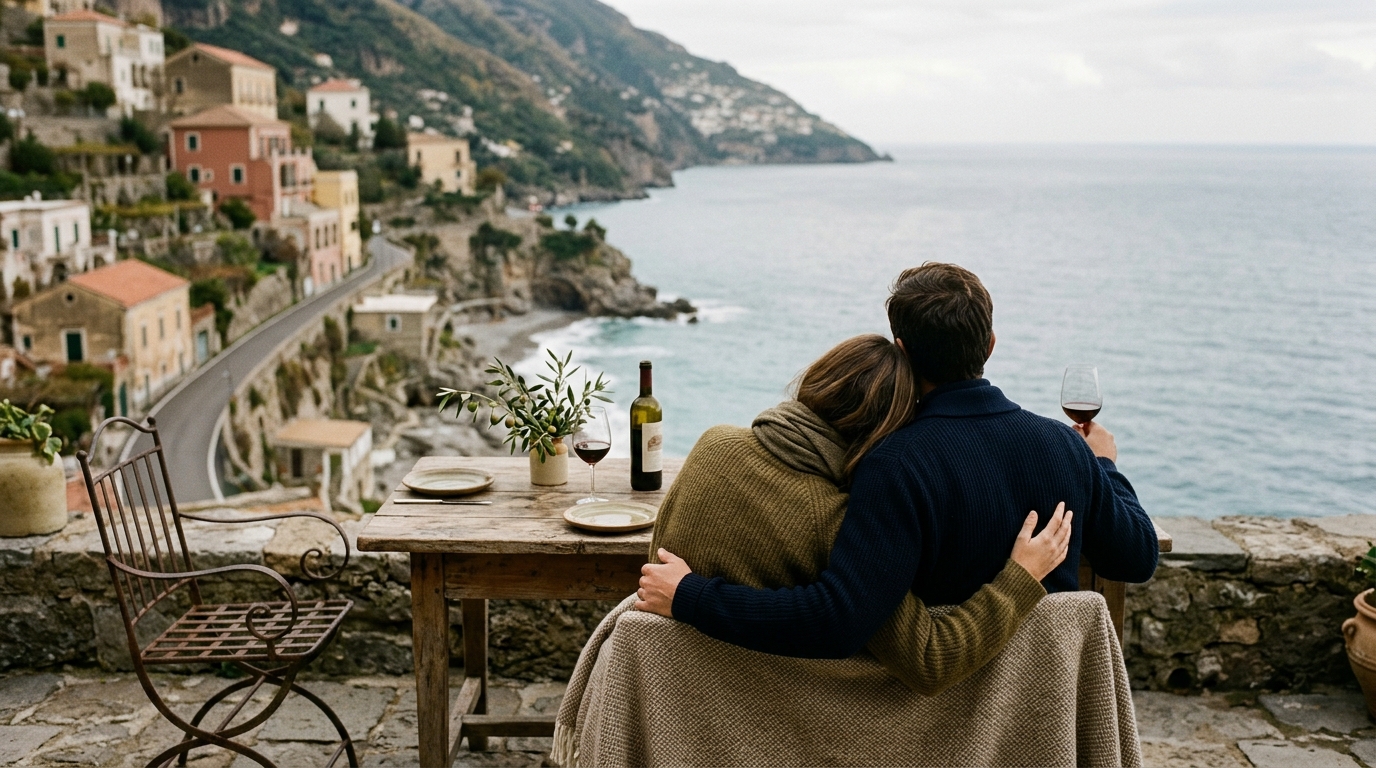
The Empty Season Belongs to Lovers
The Empty Season Belongs to Lovers
There's a particular kind of quiet that settles over a hotel when the crowds thin out. Not silence—something richer than that. The sound of your own footsteps on polished floors. The way voices carry across a lobby built for fifty but hosting five. This is the architecture of off-season romance, where space itself becomes a luxury no peak-time guest ever truly experiences.
At QA Villa, the shoulder months—late October through early March, minus the holiday spikes—transform the property into something resembling a private estate. The same suites, the same views, the same attentive staff. But the rhythm changes. Everything slows to accommodate deeper attention, longer conversations, the kind of unstructured time that modern life rarely permits.
The Economics of Emptiness
Let's address it directly: prices drop when demand softens. This isn't a secret, but it's also not the full story. What shifts during off-season isn't just the rate—it's the ratio between what you pay and what you receive. The dining room still sets tables with the same linens. The kitchen still sources from the same suppliers. But suddenly you're not competing with twelve other couples for the chef's focus or the best table by the window that catches afternoon light.
That window table matters more than you'd think. During high season, you take what you're given and feel grateful. In February, you mention a preference at check-in and find it reserved for you every evening of your stay without asking again. This kind of attention isn't about better service—it's about available capacity meeting genuine care.
What Actually Changes (And What Doesn't)
The pool operates year-round, heated to the same temperature in January as in July. But in January, you might have it entirely to yourselves at dusk, steam rising into cool air while the last pink drains from the sky. That version of the pool—private, cinematic, quietly surreal—simply doesn't exist in August.
The spa runs the same treatments. The difference is in the spaces between appointments. No rushed transitions. No sense of a conveyor belt of relaxation. Your therapist might spend an extra ten minutes on tension she's noticed in your shoulders, not because she's supposed to, but because the next booking isn't breathing down the schedule.
Breakfast lingers. Not because service is slower—the kitchen operates with the same precision—but because there's no subtle pressure of occupied tables waiting. You finish your coffee. Order a second pastry you don't need. Read three more pages. The morning opens rather than pushes.
The Weather Question
People avoid off-season travel because they've internalized the idea that weather must be perfect for a trip to succeed. But romance doesn't actually require sunshine. It requires focus—on each other rather than itineraries, on conversation rather than attraction-hopping.
Some of the most memorable stays happen during weather that would be called "poor" in travel guides. Rain that keeps you in. Wind that makes the garden dramatic rather than merely pretty. That specific quality of light you only get in winter—thin, precise, honest. These aren't compromise conditions. They're different conditions, creating different kinds of intimacy.
The fireplace in the library lounge operates all year but means nothing in July. In November, it becomes the magnetic center of the building, pulling guests into proximity without forcing interaction. You read in adjacent chairs. Someone else plays chess silently in the corner. A staff member refreshes the wood without interrupting anyone's reverie. This is the off-season social contract: presence without performance.
Why This Works Now
There's something about the current moment—post-pandemic recalibrations, economic uncertainty, the exhausting pace of everything—that makes off-season travel feel less like settling and more like resisting. Choosing February over August becomes a small act of opting out of manufactured peaks and artificial demand.
You're also avoiding the self-conscious performance of peak-season romance. No Instagram pressure to prove your getaway worthy. No comparison with other couples doing the same choreographed escapes. Just two people in a beautiful space with time that doesn't feel pre-scripted.
The garden at QA Villa looks different across seasons but never diminished. Spring's explosion of color becomes autumn's sculptural restraint—bare branches against stone, the bones of the landscape revealed rather than decorated. It's the difference between abundance and essence. Both valuable. Rarely available in the same visit.
The Sound of Space
One morning last November, a guest mentioned that what struck her most wasn't what the villa offered but what it withheld: noise, crowds, rush, the ambient stress of popular places during popular times. She'd stayed in August years before and enjoyed it. But this visit felt like a completely different property, calmer at its core.
That calm isn't manufactured through spa music or forced tranquility. It's structural. Fewer guests means sound carries differently, time moves differently, staff interact differently. The building returns to something closer to its original residential proportions—a home rather than a hotel, even while maintaining every professional standard.
Off-season romance works because intimacy requires room. Not just physical space, though that helps. Room in the schedule. Room in the sensory environment. Room to be bored together, which turns out to be one of the more reliable tests of compatibility.
If you've been waiting for the right time to visit, consider that "right" might mean something different than you've been taught. Explore availability during our quieter months—you might find not just better rates, but better conditions for what you're actually seeking.